
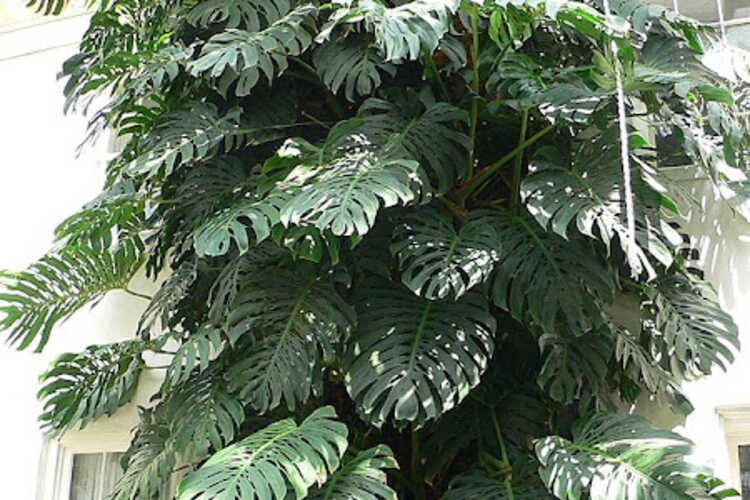
Quick answer: Monsteras are tropical American members of the arum family (Araceae), many of which grow as climbing vines in humid forests. Their aerial roots help them attach to tree trunks and move toward more favorable light. Several species develop split or perforated leaves as they mature, but the pattern varies considerably by species and stage of growth.
Where Monstera grows naturally
The genus is native to tropical regions of the Americas rather than to every rainforest in the world. Different species have different ranges. For example, Monstera deliciosa occurs naturally from Mexico to Panama, according to NC State Extension, while Kew lists M. pinnatipartita across parts of Central and South America.
Native habitat is not a single temperature, rainfall or light setting. Some vines climb damp forest trunks, while juvenile plants experience conditions near the forest floor. An indoor plant cannot recreate an entire forest ecosystem, but it can benefit from filtered light, warm conditions, aerated roots and climbing support.
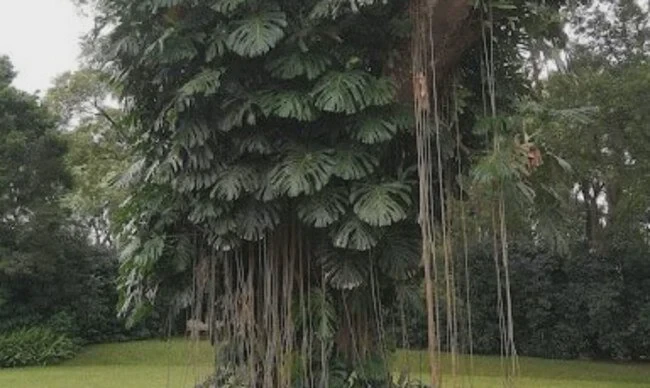
How aerial roots support a climbing vine
Aerial roots emerge from the stem and may attach to rough surfaces. Their role in climbing helps distinguish these plants from rosette-forming houseplants. Many Monsteras behave as hemiepiphytic climbers during their lives, supported by surrounding vegetation rather than relying on a freestanding trunk.
At home, a secure vertical plank, pole or trellis allows you to guide the stem and keep large leaves from sprawling. The support should be stable enough for mature foliage.
Why young and mature leaves look different
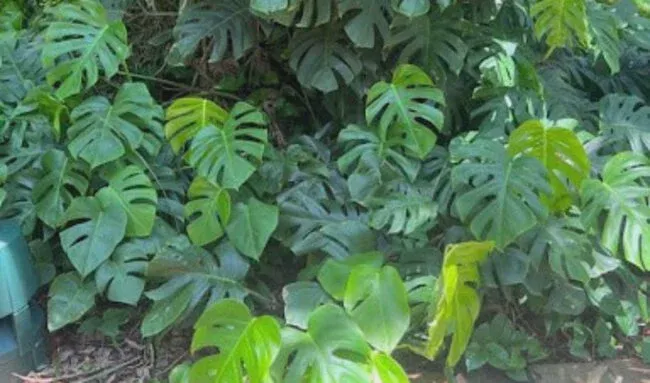
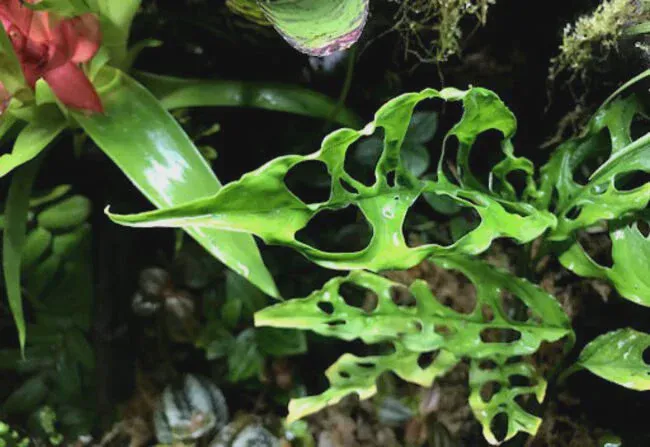
A juvenile M. deliciosa often bears smaller, nearly entire leaves. As a healthy climbing stem matures, leaves may enlarge and develop marginal divisions and internal holes, known as fenestrations. In contrast, M. adansonii is well known for holes within the leaf blade, and other taxa vary in size and degree of division.
The holes are a normal developmental feature, not evidence that insects have eaten the plant. Several adaptive explanations for fenestration have been proposed, but a single definitive cause for every species should not be assumed. Leaf form is shaped by maturity, environment and heredity.
Six Monstera names you may encounter
| Name | How to understand it |
|---|---|
| Monstera deliciosa | Popular large climbing species with deeply divided mature leaves. |
| Monstera adansonii | Accepted species with conspicuous holes within the blade. |
| Monstera epipremnoides | Accepted species from Costa Rica to Panama; sometimes discussed around “Esqueleto” trade labels. |
| Monstera pinnatipartita | Accepted tropical American climbing species with strongly divided mature foliage. |
| Monstera dubia | Known among growers for juvenile leaves that often lie closely against supports. |
| Monstera obliqua | Distinct name often confused with highly perforated retail plants; identity needs reliable verification. |
Nursery labels and social media trade names do not always align with accepted botanical taxonomy. Consult botanical references or a reputable grower when identity matters.
How big can a wild Monstera become?
With a tree to climb and years of growth, some Monsteras reach heights far beyond those of ordinary indoor specimens. NC State Extension reports that M. deliciosa can grow into a very large woody climbing vine in its native-like settings, while typical indoor specimens remain much smaller. Individual sizes vary with species, age and habitat; there is no meaningful single maximum for all Monsteras.
What wild growth teaches an indoor gardener
- Give a climbing vine a secure support instead of relying only on a decorative container.
- Provide usable bright indirect light; do not force a sudden move into full midday sun.
- Use a well-aerated growing medium and a container that drains.
- Accept that juvenile foliage may not look like mature wild foliage.
- Protect natural habitats: choose responsibly propagated plants rather than collecting from the wild.
Frequently asked questions
Do all wild Monsteras have holes in their leaves?
No. Leaf shapes vary by species and age. Juvenile plants may lack the mature fenestrations seen in identification photos.
Does a bigger pot create bigger leaves?
Not by itself. Leaf size depends on development, light, health, climbing conditions and plant genetics.
Are Monsteras native to tropical Asia?
The genus is native to tropical America, although plants are now cultivated and sometimes naturalized elsewhere.