
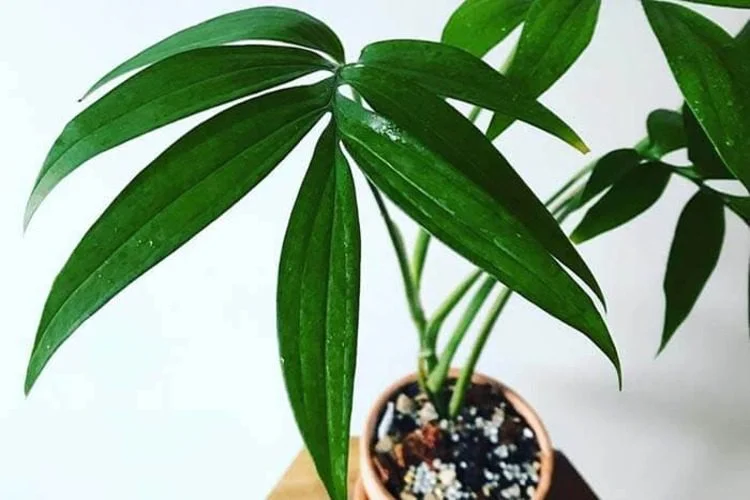
Monstera subpinnata is a distinct climbing aroid species, not a cultivar of Monstera deliciosa. Its mature leaf blades divide deeply into narrow lobes, giving the foliage a feather-like appearance. Kew accepts the species and records a native range from southeastern Colombia to Bolivia, rather than Costa Rica.
How to identify Monstera subpinnata
Look for a climbing stem with aerial roots, long petioles and mature leaves divided almost to the midrib. These lobes are part of the leaf blade, not a palm's separate leaflets. Juvenile leaves may be less divided. An older botanical name, Monstera latiloba, is listed among taxonomic synonyms, but a seller's label is not enough to identify an individual plant with certainty. Compare with Monstera pinnatipartita, which has a different mature leaf outline.
Light, temperature and climbing support
Provide bright filtered light rather than prolonged direct midday sunlight. A very dim room slows growth; sudden strong sun may scorch tender foliage. As a tropical forest climber, it benefits from stable indoor warmth away from cold drafts and dry heater streams. Give the plant a secure stake, trellis or moss pole and use soft ties to support the stems without constricting leaves. A climbing habit can encourage more mature foliage over time, but growth rate varies.
Watering, potting mix and humidity
Use a container with drainage holes and an airy houseplant mix that retains some moisture without staying soggy. Check the mix below the surface and water thoroughly when the root zone has partly dried; drain the saucer after watering. A rigid weekly watering schedule is not reliable because light, pot size and season change drying time. If leaf edges dry out in a heated room, measure humidity before using a clean room humidifier. Daily misting offers little sustained humidity benefit.
Feeding and propagation
Apply a balanced houseplant fertilizer at an appropriate, conservative label rate during active growth; avoid feeding as a substitute for light. To propagate, take a healthy stem piece containing a node, place the node in a clean rooting medium or water, keep foliage above the waterline, and provide warm bright indirect light. Move the rooted cutting to a small drained pot once it can support growth. A detached leaf without a stem node will not reliably produce a new climbing vine. More detail is in our Monstera propagation guide.
Common problems and reliable references
Yellowing may result from excess moisture, drought, pests or natural leaf aging; inspect the roots before assuming one cause. Look closely along stems and under new leaves for scale or thrips. Keep aroid plant parts away from children and pets that may chew them. Botanical identity and native range: Royal Botanic Gardens, Kew. General cultivation: Iowa State Extension. Propagation: Iowa State stem-cutting guidance.