
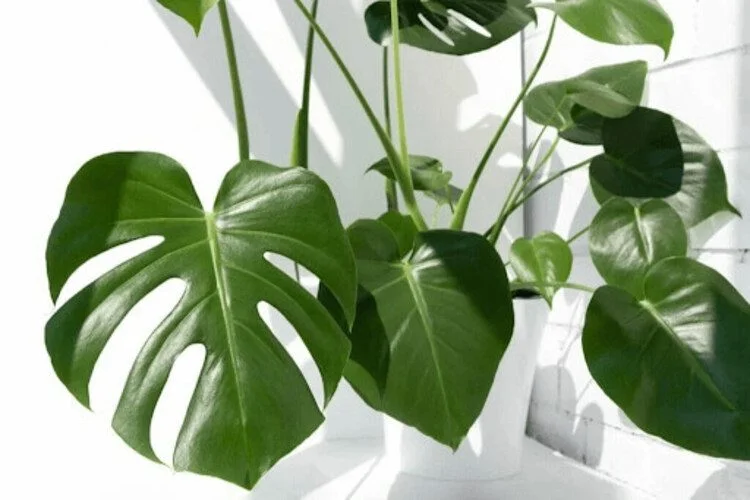
Monstera's clearest benefits are visual and practical: it adds bold foliage to a room, offers an engaging plant-care hobby and can grow into a striking indoor climbing plant. Claims that a single Monstera purifies household air, prevents mold or treats sleep problems are not supported by good evidence. Enjoy it as a plant, not as a medical or air-cleaning device.
1. Distinctive foliage for interior spaces
Popular Monstera deliciosa grows large glossy leaves that develop characteristic splits and holes as the plant matures. Its form makes it a focal point in bright living spaces. Younger leaves can be solid: the distinctive leaf openings depend on maturity and growing conditions, not an instant fertilizer trick. The Royal Horticultural Society's Monstera guide explains growth habits and indoor requirements.
2. A rewarding indoor-gardening hobby
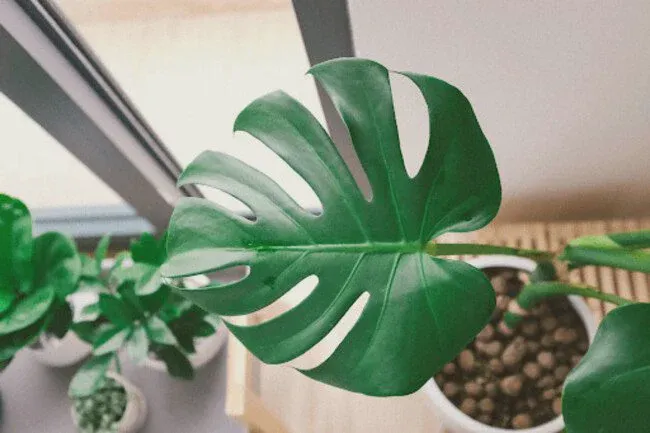
Learning to choose a bright position, check moisture, clean leaves, provide support and notice new growth gives houseplant owners a practical ongoing activity. You do not need specialist equipment to start: a stable pot with drainage, appropriate potting mix, warmth and indirect light are the essentials.
3. Bringing a natural element into daily life
Research on plants and human wellbeing suggests that indoor greenery can be enjoyable and may support a more pleasant environment. These are population-level observations, not proof that a particular Monstera treats anxiety, boosts concentration by a measurable percentage or causes better sleep. The RHS guide to houseplants and wellbeing describes the evidence and its limitations.
4. Adaptable display and climbing possibilities
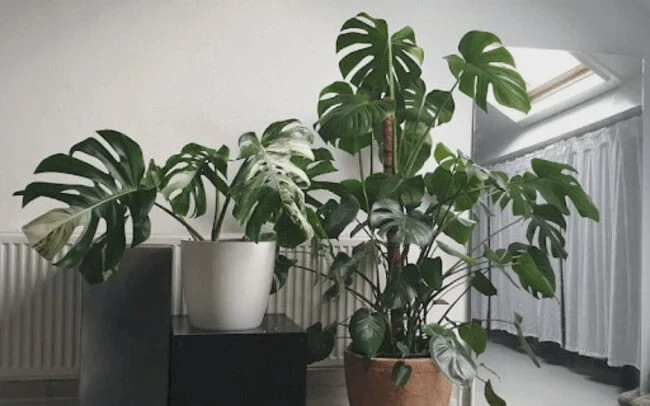
A Monstera can grow as a potted specimen or climb an appropriate support. Allow enough room for its mature size; avoid blocking paths or creating a pot that can tip over. Learn more about repotting a Monstera with a moss pole if a climbing display fits your space.
5. A chance to learn plant growth and propagation
Watching leaf development and, where appropriate, propagating a stem cutting with a node are useful ways to learn plant biology. Not every section of a leaf can create a new plant, and an ordinary leaf without a node is not a reliable propagation method. The RHS Monstera plant guide offers species-specific care.
Does Monstera purify indoor air?
Not meaningfully at ordinary household plant numbers. Plants can take up some compounds in controlled experiments, but translating closed-chamber results to real rooms has led to exaggerated claims. The US EPA says there is no evidence that a reasonable number of houseplants removes significant quantities of indoor pollutants. A Drexel University research review likewise finds ordinary ventilation far more effective than potted plants for removing volatile organic compounds.
For indoor air quality, reduce pollution sources, ensure appropriate ventilation and use correctly selected air-cleaning equipment where needed. Do not rely on houseplants to prevent mold or remove smoke.
Does Monstera release oxygen at night or improve sleep?
Like other green plants, Monstera uses light for photosynthesis. It also respires day and night. There is no credible basis for saying a bedside Monstera produces enough night-time oxygen to improve breathing or sleep. Choose a plant because you enjoy it, not as a substitute for ventilation or treatment of sleep issues.
Important safety consideration: cats, dogs and children
Monstera is not safe to chew or eat. It contains insoluble calcium oxalate crystals that irritate the mouth and throat. Keep it securely out of reach of pets and young children; for exposure concerns consult an appropriate health professional. Our article on Monstera toxicity in cats explains symptoms and veterinary guidance. The ASPCA lists Monstera deliciosa as toxic to cats and dogs.
Keeping a Monstera healthy
- Light: bright, indirect light rather than harsh prolonged direct sun.
- Water: check moisture in the pot and water thoroughly when appropriate, allowing excess to drain.
- Support and space: provide a stable support for climbing stems and room for growing leaves.
- Potting mix: use a medium that drains well; avoid a pot standing in water.
- Environment: protect from cold drafts and abrupt changes; provide warmth and reasonable humidity.
Sources: RHS growing guide; RHS houseplants and health; US EPA air quality; Drexel research review.