
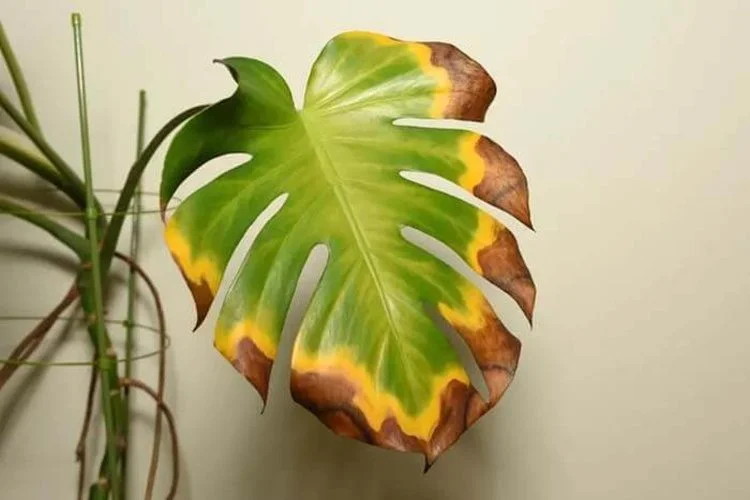
Brown Monstera leaves do not point to one single problem. Crispy tips after a dry spell differ from pale scorched patches on a sun-facing blade or expanding dark spots on damp foliage. Inspect the pattern and the condition of the potting mix first. Once tissue is brown and dead, it cannot turn green again, so judge treatment by whether new damage stops.
Brown tips and edges: begin with moisture
Crisp edges can occur when a pot has become too dry between waterings, the room is persistently hot and dry, or excess fertilizer salts accumulate in the mix. Lift the pot and check deeper into the soil rather than relying on a moisture meter reading alone. If the root zone is dry, water through until the pot drains and empty the saucer. If it is still wet, do not add more water just because the leaf has a dry edge. Check exposure to heater airflow too.
Brown patches after direct sun
Bleached, tan or papery areas on the side facing a bright window are consistent with sun scorch, especially after moving a plant from dim light to strong midday sun. Monstera performs best with bright filtered light indoors. Damaged tissue will not repair, but moving the plant behind a sheer curtain can prevent further scorch. Note the window orientation and whether the patch appeared just after a sunny day. Shade is not the same as darkness: too little light also weakens growth.
Dark brown or black spots with yellow halos
Wet-looking lesions, darkening patches or rapidly expanding spots can occur with bacterial or fungal leaf disease, but also with overwatering, chilling or physical damage. Avoid naming a pathogen from leaf appearance alone. Check roots, reduce leaf wetness, isolate a potentially infected plant and prune severely affected tissue with clean tools when necessary. A random fungicide cannot cure an undiagnosed infection; consult an extension service if spots spread. See black spots on Monstera.
Overwatered roots and brown leaves
If the mix remains saturated, water may be plentiful but roots cannot function normally. Additional symptoms often include yellowing and drooping; severely affected roots may be soft and dark. Drain standing water, assess light and inspect the root ball if deterioration continues. A large container filled with dense mix can stay damp much longer than expected. Use a modest pot with drainage and airy mix when repotting is truly necessary. Refer to overwatered Monstera.
Pests, salts and natural aging
Thrips can leave silvery scars and small dark specks; scale makes raised bumps and sometimes honeydew. Search the leaf undersides and sheltered stems for insects before treating. Overfeeding may scorch roots and cause marginal browning; flush excess salts only if drainage works, and stop unnecessary fertilizer. An isolated older leaf that slowly yellows then browns while new leaves remain healthy may simply be aging. Numerous deteriorating leaves require more investigation.
The safest way to fix the cause
- Identify whether damage is crisp, papery, wet-looking or associated with insects.
- Check root-zone moisture and drainage before watering again.
- Move the plant away from direct scorching sun and temperature extremes.
- Inspect roots only if severe, progressive or mixed symptoms warrant it.
- Monitor the newest foliage and prune dead tissue for appearance once the cause is controlled.
Sources: Iowa State environmental diagnosis, Iowa State houseplant disease diagnosis and University of Maryland Extension diagnosis guide. Also compare yellow leaves and broader Monstera symptoms.