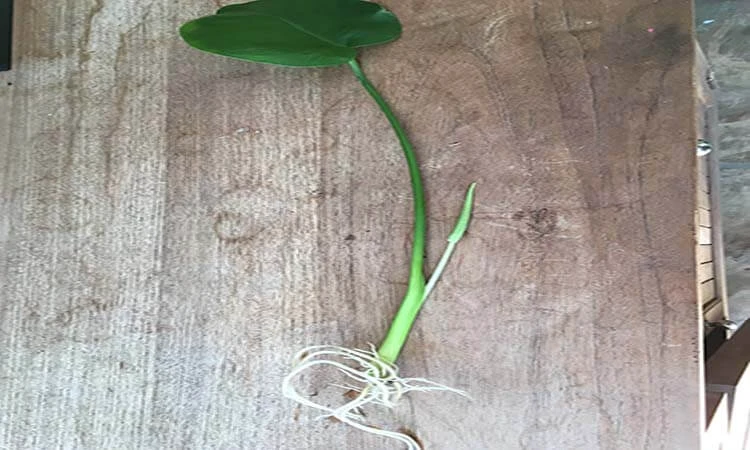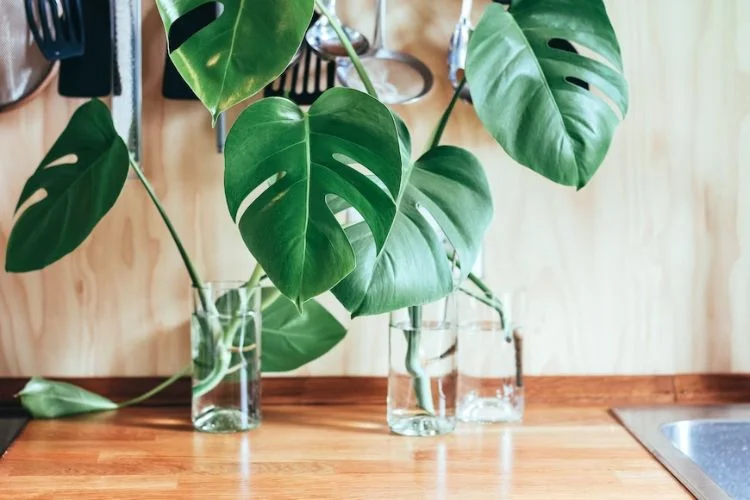
A detached Monstera deliciosa leaf without a stem node will not reliably produce a new climbing vine. The leaf may remain attractive in a vase, and a petiole may sometimes grow roots, but roots alone do not create new shoots. For dependable propagation, use a healthy segment of stem with a viable node and bud.
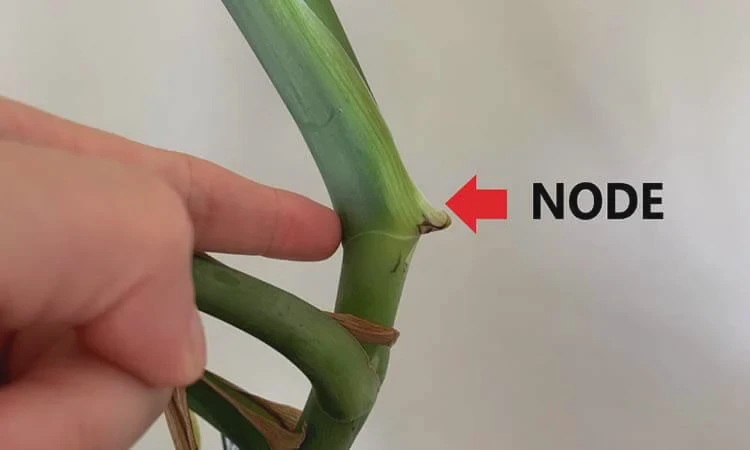
Where exactly is the node?
Look along the main vine for a slightly enlarged joint where a leaf stalk, aerial root or bud emerges. The section between joints is an internode. A long leaf stalk is a petiole, not a piece of main stem; simply including more petiole in the cut does not add a node. Aerial-root nubs can help locate nodes, but an aerial root by itself is not the growth point that produces a new vine. If buying a cutting online, ask for a clear photo of the stem node, not just a leaf.
Why some leaf cuttings survive but never grow
Houseplants differ in the tissues they can regenerate from. African violets, for example, can propagate from leaves, but climbing Monstera is normally propagated from stem sections. A leaf can absorb water and stay presentable for weeks, sometimes longer; that is not evidence it will form the new stem needed for multiple leaves. Avoid the claim that every Monstera leaf or root fragment can eventually become a full plant.
How to prepare a healthy stem cutting
- Choose a vigorous Monstera free of visible pests.
- Identify at least one viable node; a second node offers more rooting options.
- Use clean sharp pruners to cut below the node, keeping a leaf when practical.
- Put the node in fresh water or clean, airy damp rooting medium, keeping leaf blades and most of their stalks above the waterline.
- Place the cutting in steady warmth and bright indirect light; replace jar water regularly.
- When roots are established, pot gently into a small container with drainage and a suitable houseplant mix.
Water or soil: which rooting method is better?
Water makes root growth easy to observe, but roots formed in water may not adapt immediately after potting into mix; temporary drooping after transplant is possible. Perlite or a light coarse moss mix holds air and moisture around a stem node. Neither method can rescue a cutting that lacks a viable node. Avoid burying a leaf blade or keeping the rooting container in hot direct sunlight. Iowa State Extension advises moist, airy medium, bright indirect light and careful aftercare for water-rooted cuttings.
Troubleshooting and aftercare
A cutting that turns soft in stagnant water may be rotting; replace dirty water, clean the container and remove dead tissue while checking that a healthy node remains. A dry shriveled stem may not be receiving enough moisture. Once established, transition to normal watering, filtered light and climbing support. For detailed methods see Iowa State stem-cutting guide and propagating houseplants by cuttings.