
Independent gardening guides. Some links earn us a commission at no cost to you. Read our affiliate disclosure
Newsletter
Monstera deliciosa (Monstera deliciosa)

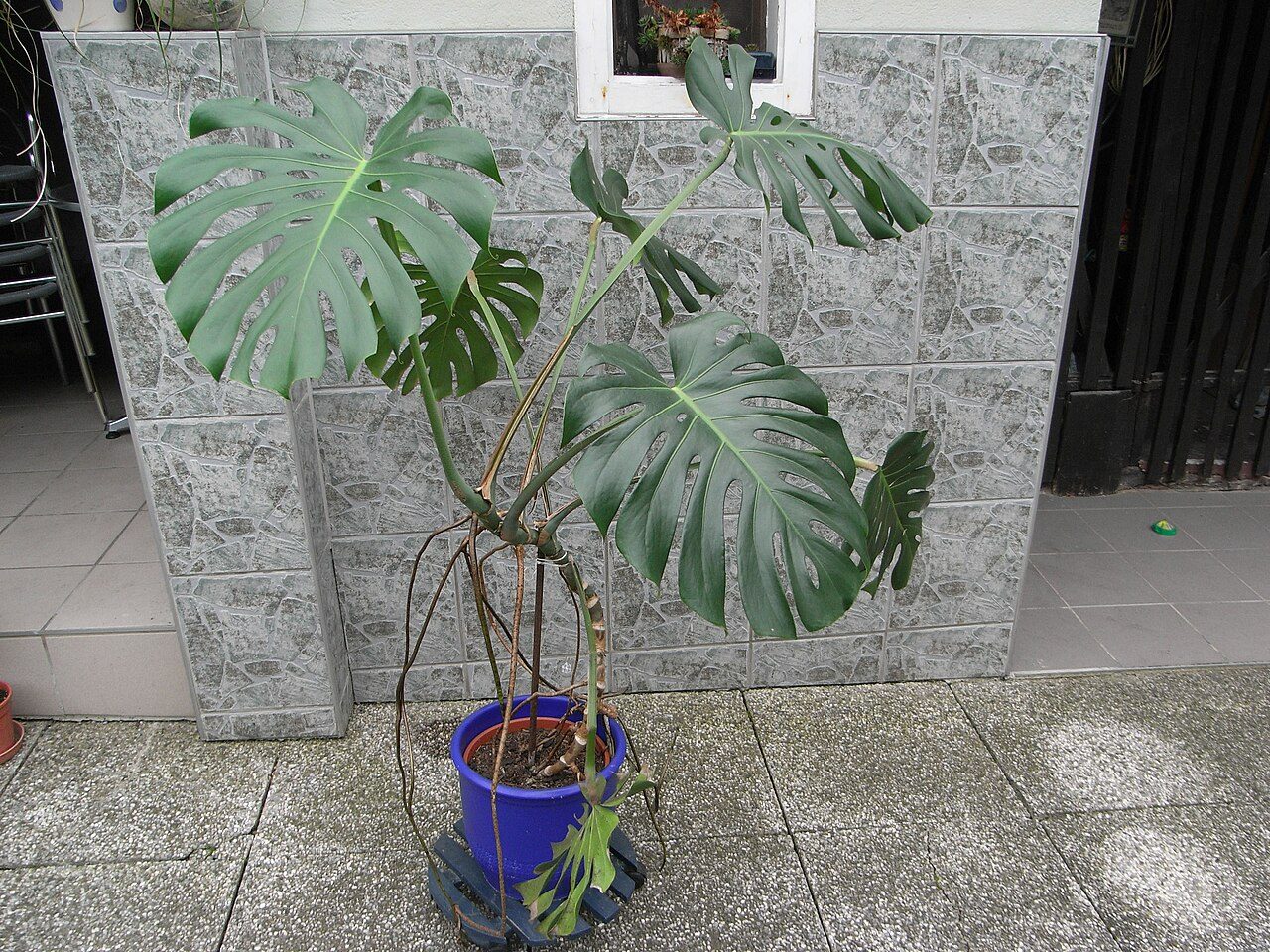
Photo: Cryptosporella, CC BY-SA 3.0 via Wikimedia Commons

Monstera deliciosa

Monstera deliciosa · Araceae

Also known as: Swiss cheese plant, Split-leaf philodendron, Cutleaf philodendron, Hurricane plant, Ceriman, Mexican breadfruit, Window leaf plant, Fruit salad plant, Monstera, Thai Constellation, Albo Variegata

A large climbing aroid with split, holey leaves. Give it bright indirect light, a sturdy support, and water once the top of the mix has dried.

Light
Medium light, Bright indirect light
Care level
Moderate
Where it grows
Indoors, Outdoors in warm climates
Cats and dogs
Toxic to pets Source (opens in a new tab)

ASPCA lists Monstera deliciosa (on its page titled "Cutleaf Philodendron") as toxic to dogs and cats. The toxic principle is insoluble calcium oxalates. Signs listed: oral irritation, intense burning and irritation of the mouth, tongue and lips, excessive drooling, vomiting and difficulty swallowing. If a pet chews this plant, contact your vet or an animal poison control service.

View My Garden

Check a problem with this plant

How to identify it

Monstera deliciosa is a climbing aroid in the arum family, Araceae. Despite common names such as split-leaf philodendron, it is not a philodendron (NC State Extension). Adult leaves are glossy and deep green (RHS), heart-shaped at the base, cut into lobes from the edge and pierced by many round or oval holes (Croat et al. 2024).

Young plants look different: juvenile leaves are smaller and have no holes, which appear only as leaves mature (NC State Extension; Croat et al. 2024). The smaller Swiss cheese vine, Monstera adansonii, is often confused with it; NC State describes M. deliciosa as the larger plant with bigger leaves. Named cultivars include the cream-marbled 'Thai Constellation' and the variegated 'Albo Variegata' (NC State Extension).

Light

NC State Extension says it prefers moderate brightness but not direct sunlight, and the RHS recommends bright, indirect light for plants grown indoors. Variegated cultivars need more light than plain green ones (NC State Extension).

Watch the leaves. Iowa State Extension notes that houseplants with too little light grow pale and spindly or drop leaves, while bleached or damaged leaves, or leaves that yellow or brown and drop, can point to too much. For window placement and grow lights, see Monstera light requirements.

Potting mix and drainage

Use a pot with a drainage hole; without one the mix stays wet and roots can rot (Iowa State Extension). NC State Extension lists a soil high in organic matter with good drainage, and the RHS suggests a peat-free, loam-based potting compost. Skip the gravel layer at the bottom of the pot: Iowa State notes it creates a wetter zone that encourages root rot.

When repotting, move up only one or two pot sizes, ideally in late winter or spring (Iowa State Extension). The stems get heavy, and NC State says sturdy support is needed to stop them breaking. See Best pots for Monstera.

When to water

Check the mix before you water. NC State Extension advises watering thoroughly, then letting the top quarter to one-third of the mix dry before watering again. Push a finger into the pot: if the top part still feels damp, wait and check again later.

After watering, empty the saucer; Iowa State Extension warns never to leave plants sitting in water, because roots that stay wet rot. The RHS advises watering while the plant is in growth and keeping it just moist in winter, so expect to water less often in the cooler months. More detail: How to water Monstera.

Humidity and temperature

NC State Extension gives an average temperature range of 60 to 85°F and says the plant wants high humidity. A humidifier or a tray of wet pebbles under the pot can help (NC State). Iowa State Extension adds that misting does not meaningfully raise humidity and can spread disease; grouping plants also helps.

The RHS rates it H1B, meaning it can be grown outside in summer, and says not to keep it outdoors at temperatures below 18°C (about 64°F). NC State lists it as hardy in USDA zones 10a to 12b. See Monstera humidity and Can Monstera live outside?

Feeding

Feed only while the plant is actively growing, from spring into autumn, and cut back in winter (Iowa State Extension). The RHS suggests a balanced liquid fertiliser during the growing season. Whichever product you choose, follow the product label rate.

After repotting, Iowa State suggests waiting about 2 to 4 weeks before regular feeding resumes. More detail: How to fertilize Monstera.

Propagation

NC State Extension lists stem cuttings and layering as propagation methods, and the RHS also lists seed and root-tip cuttings. Our step-by-step guide, How to propagate Monstera, covers choosing a cutting and rooting it in water or mix, and Can you propagate Monstera without a node? answers a common question about leaf-only cuttings.

Wear gloves when you cut: NC State notes that contact with the sap can irritate skin.

Growth and size

A root-climbing vine. NC State Extension says it can reach 70 feet in its native range but usually stays between 6 and 8 feet in homes, and it lists the growth rate as rapid. The RHS describes an evergreen climber that grips with aerial roots, reaching 4 to 8 metres over 10 to 20 years.

NC State Extension says the leaves reach a foot or more; on wild adult plants the blades are typically 40 to 75 cm long (Croat et al. 2024). A moss pole or other sturdy support keeps the stems upright. See How to help a Monstera grow faster and How to prune Monstera.

Warning signs

  • Yellowing leaves and a wet mix: roots that stay wet can rot (Iowa State Extension). Check the mix and the drainage hole, and let the top quarter to one-third dry before watering again. See yellow Monstera leaves.
  • Bleached or damaged patches: possibly too much light (Iowa State); NC State advises keeping it out of direct sunlight. Check how much sun reaches the leaves and move the plant to bright, indirect light. See brown spots on Monstera.
  • Young leaves without holes: normal, as holes form only on mature leaves (NC State).
  • Insects on stems or leaves: the RHS lists scale insects and glasshouse red spider mite. Check leaf undersides, isolate the plant and use a product labelled for the pest, following the label. See scale on Monstera.

Related guides

Sources

  1. ASPCA Animal Poison Control: Cutleaf Philodendron (Scientific Name: Monstera deliciosa) (checked October 11, 2026)
  2. NC State Extension Gardener Plant Toolbox: Monstera deliciosa (checked October 11, 2026)
  3. Royal Horticultural Society: Monstera deliciosa (F) (checked October 11, 2026)
  4. Plazi TreatmentBank (Croat, Cedeño-Fonseca & Ortiz (2024), Revision of Monstera of Central America, Phytotaxa 656(1)): Monstera deliciosa Liebm. treatment (checked October 11, 2026)
  5. NC State Extension Gardener Plant Toolbox: Monstera adansonii (checked October 11, 2026)
  6. Iowa State University Extension and Outreach: How to Care for Houseplants (checked October 11, 2026)

Last reviewed